
Healthcare providers work hard to deliver quality patient care, but even the best clinical outcomes can be overshadowed by administrative challenges. One of the most common causes of delayed payments and denied claims is inaccurate or incomplete insurance verification.
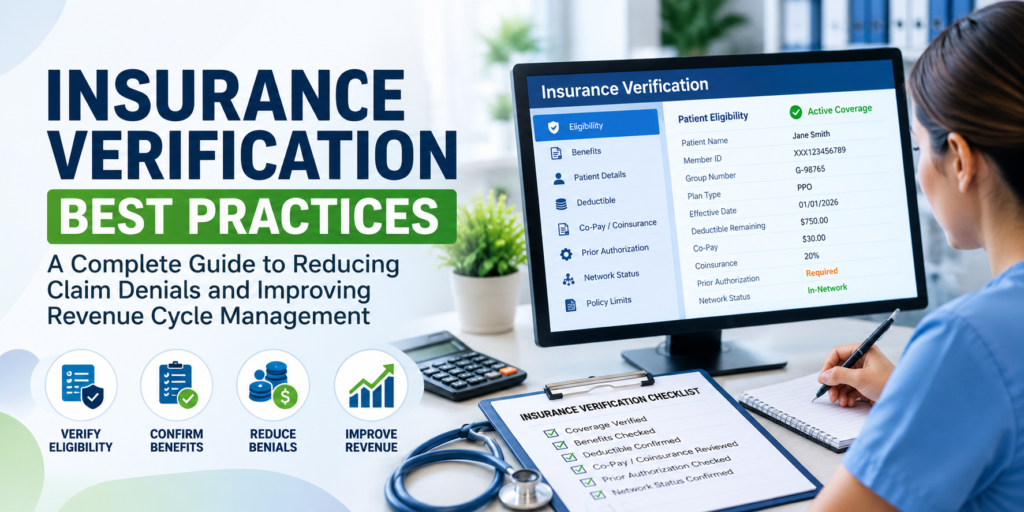
Insurance verification is much more than checking whether a patient has active coverage. It involves confirming eligibility, benefits, deductibles, co-pays, prior authorization requirements, network participation, and policy limitations before services are provided.
When performed correctly, insurance verification protects your practice from unnecessary revenue loss while creating a better experience for patients.
In this guide, we’ll explore the best insurance verification practices every healthcare organization should follow to reduce claim denials, accelerate reimbursements, and strengthen revenue cycle performance.
Table of Contents
- Why Insurance Verification Matters
- What Is Insurance Verification?
- Benefits of Accurate Insurance Verification
- Insurance Verification Best Practices
- Common Insurance Verification Mistakes
- Technology’s Role in Insurance Verification
- Why Outsourcing Insurance Verification Makes Sense
- Frequently Asked Questions
- Final Thoughts
- Book Your Free Consultation
Why Insurance Verification Matters
Insurance verification is one of the first and most important steps in the revenue cycle. Errors made before a patient is seen often create problems that continue throughout the billing process.
Poor verification can lead to:
- Claim denials
- Delayed reimbursements
- Increased administrative workload
- Unexpected patient balances
- Higher accounts receivable
- Reduced patient satisfaction
On the other hand, accurate verification allows practices to submit clean claims the first time, improving reimbursement rates and reducing costly rework.
What Is Insurance Verification?
Insurance verification is the process of confirming a patient’s insurance information before medical services are provided For Medicare, CMS provides the HETS 270/271 system to support eligibility inquiries and help providers prepare accurate claims..
The verification process generally includes:
- Confirming active insurance coverage
- Validating patient demographics
- Checking eligibility
- Reviewing benefits
- Confirming deductibles
- Identifying co-pay and coinsurance amounts
- Determining referral requirements
- Identifying prior authorization requirements
- Confirming in-network provider status
- Reviewing policy limitations
Completing these steps before the patient’s appointment helps avoid unnecessary billing issues later.
Primary Keyword: Insurance Verification Best Practices
Following insurance verification best practices allows medical practices to improve financial performance while delivering a smoother patient experience.
Verify Insurance Before Every Appointment
Many practices assume that returning patients have unchanged insurance information. Unfortunately, insurance plans frequently change due to:
- New employers
- Open enrollment
- Policy updates
- Medicare changes
- Medicaid eligibility changes
Always verify coverage before every scheduled appointment even for established patients.
Doing so helps prevent unexpected denials caused by inactive or modified insurance plans.
Collect Accurate Patient Information
Verification begins with collecting complete patient information.
Staff should confirm:
- Full legal name
- Date of birth
- Insurance ID number
- Group number
- Policy holder information
- Address
- Phone number
Even small spelling errors can create claim rejections.
Encourage patients to bring updated insurance cards during every visit.
Verify Eligibility in Real Time
Real-time eligibility verification is one of the biggest improvements modern medical practices can make. CMS explains how standardized electronic eligibility inquiries help providers obtain coverage and patient financial responsibility information.
Instead of manually calling insurance companies, electronic eligibility tools instantly verify:
- Coverage status
- Effective dates
- Primary insurance
- Secondary insurance
- Benefit limitations
Real-time verification significantly reduces manual work while improving billing accuracy.
Check Deductibles and Patient Responsibility
Patients increasingly have high-deductible health plans.
Before treatment, practices should determine:
- Remaining deductible
- Co-pay amount
- Coinsurance percentage
- Out-of-pocket maximum
Discussing financial responsibility beforehand improves transparency and increases point-of-service collections.
Patients appreciate knowing costs before receiving treatment.
Confirm Prior Authorization Requirements
One of the leading causes of denied claims is missing prior authorization.
Before services are performed, verify whether authorization is required for:
- Imaging studies
- Surgical procedures
- Specialty medications
- Physical therapy
- Durable medical equipment
Obtaining authorization beforehand protects both patients and providers from costly billing issues.
Learn more about our Prior Authorization services to simplify approvals and reduce administrative delays.
Verify Provider Network Status
Patients often assume every physician within a practice accepts their insurance.
Always verify:
- Provider participation
- Facility participation
- Network restrictions
- Referral requirements
Providing services outside the patient’s network without informing them may lead to denied claims and dissatisfied patients.
Train Staff Regularly
Insurance regulations constantly change.
Your front-office and billing teams should receive ongoing training on:
- Insurance policies
- Medicare updates
- Medicaid requirements
- Commercial payer changes
- Verification software
- Documentation standards
Well-trained employees make fewer mistakes and improve claim accuracy.
Standardize Verification Workflows
Creating a standardized verification checklist ensures every patient receives the same level of attention.
An effective checklist includes:
- Verify demographics
- Confirm eligibility
- Check benefits
- Review deductibles
- Verify co-pay
- Confirm referrals
- Check authorization
- Confirm provider network
- Document verification results
Standardized workflows improve consistency across your practice.
Document Every Verification
Every insurance verification should be documented inside your Electronic Health Record (EHR).
Include:
- Verification date
- Insurance representative
- Reference number
- Benefits discussed
- Authorization details
- Eligibility confirmation
Proper documentation provides valuable support during claim appeals.
Utilize Dedicated Verification Specialists
Insurance verification requires attention to detail and knowledge of payer guidelines.
Many practices assign dedicated specialists responsible solely for eligibility verification.
Specialized staff improve accuracy while allowing front-desk employees to focus on patient service.
Monitor Verification Performance
Track key performance indicators (KPIs), including:
- Eligibility accuracy rate
- First-pass claim acceptance rate
- Claim denial rate
- Authorization turnaround time
- Verification completion time
- Patient collection rate
Regular reporting helps identify improvement opportunities.
Common Insurance Verification Mistakes
Avoid these common errors:
Skipping Verification for Returning Patients
Coverage changes frequently.
Waiting Until Check-In
Last-minute verification often delays appointments.
Ignoring Secondary Insurance
Missing secondary coverage leads to billing complications.
Missing Prior Authorization
One overlooked authorization can result in thousands of dollars in denied reimbursement.
Poor Documentation
Incomplete records make appeals much more difficult.
How Technology Improves Insurance Verification
Modern healthcare technology simplifies verification through:
Electronic Eligibility Verification
Instant insurance confirmation.
EHR Integration
Automatic patient information updates.
Automated Alerts
Notifications for inactive coverage or authorization requirements.
AI-Assisted Workflows
Artificial intelligence helps identify missing information before claims are submitted.
Technology reduces manual effort while increasing verification accuracy.
Why Many Practices Outsource Insurance Verification
Outsourcing insurance verification has become increasingly popular among healthcare providers.
Benefits include:
Improved Accuracy
Experienced specialists understand payer requirements.
Reduced Administrative Burden
Your internal team can focus on patient care.
Faster Claim Processing
Verified claims move through the billing cycle more efficiently.
Lower Denial Rates
Accurate verification leads to cleaner claims.
Increased Cash Flow
Practices receive reimbursements faster with fewer delays.
How Mediora Solutions Helps Healthcare Practices
At Mediora Solutions, we help physicians, clinics, specialty practices, and healthcare organizations optimize every stage of the revenue cycle.
Our services include:
- Medical Billing: Accurate coding, claims submission, payment posting, denial management, and revenue optimization.
- Credentialing & Contracting: Provider enrollment, CAQH management, Medicare, Medicaid, and commercial payer credentialing.
- Virtual Assistant: Skilled virtual medical assistants for scheduling, patient intake, documentation support, referral coordination, and administrative tasks.
- Prior Authorization: Fast, accurate authorization management to reduce treatment delays and prevent denied claims.
Whether you’re a small private practice or a multi-provider organization, our experienced team helps improve operational efficiency while maximizing reimbursements.
For personalized assistance, visit our Contact Us page to speak with one of our revenue cycle experts.
Frequently Asked Questions
Final Thoughts
Insurance verification is one of the most valuable investments a healthcare practice can make. A proactive verification process not only prevents claim denials but also improves patient satisfaction, strengthens financial performance, and supports a healthier revenue cycle.
By implementing standardized workflows, leveraging modern technology, training staff, and partnering with experienced revenue cycle experts, practices can dramatically reduce administrative headaches while maximizing reimbursement opportunities.
Healthcare reimbursement continues to evolve, making accurate insurance verification more important than ever. Practices that prioritize verification today are better positioned for long-term financial success tomorrow.
Ready to Improve Your Revenue Cycle?
Insurance verification shouldn’t slow your practice down-it should empower it.
If you’re looking to reduce claim denials, improve reimbursement rates, and streamline your administrative workflows, Mediora Solutions is here to help.
Book a Free Consultation or Request a Free Revenue Assessment
Contact us Today and discover how our experienced team can help your practice achieve greater financial efficiency and long-term growth.